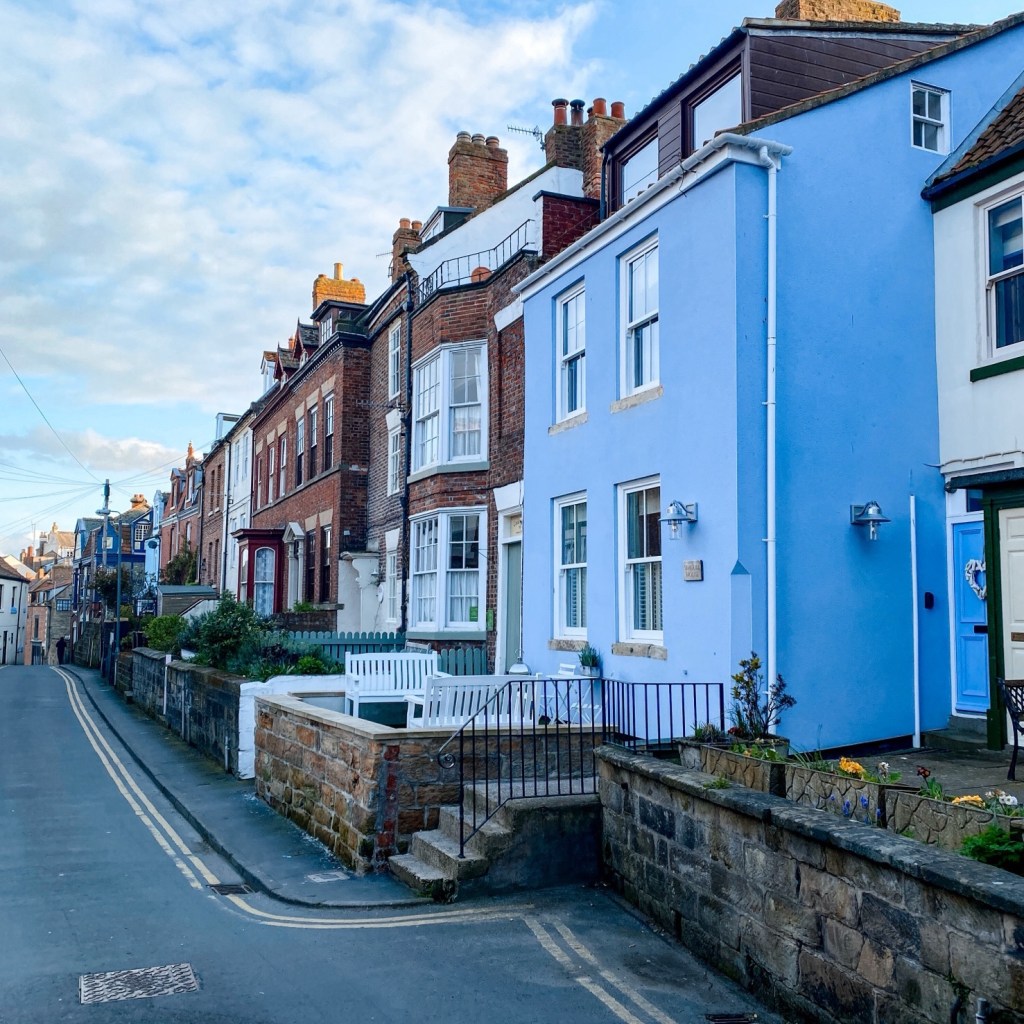
9 Prettiest Streets in the Village of Whitby, England (2026)

Disclaimer: This post contains affiliate links. If you make a booking or purchase through these links, I may earn a small commission at no extra cost to you. This helps support my site and allows me to continue writing detailed travel guides.

The captivating seaside village of Whitby in North Yorkshire, England, is known around the world for its dramatic clifftop abbey, Gothic heritage, connection to Bram Stoker’s Dracula, and maritime history that includes Captain James Cook. But beyond its famous landmarks, one of the best ways to experience Whitby’s charm is by wandering its historic streets.

From steep, cobbled lanes to winding alleys lined with independent shops, Whitby’s streets reveal the soul of this coastal town. In this guide, I share nine of the prettiest streets in Whitby, each offering its own atmosphere, views, and character. You can also see 18 Places to See in Whitby for a full town experience.

Before you start exploring, consider booking your stay in Whitby! There are excellent hotels, guesthouses, and vacation rentals available through Booking.comExpedia, or Vrbo that put you right in the heart of the village.

Sandgate

Sandgate is one of Whitby’s most atmospheric streets. It is known for its selection of Whitby jet shops where visitors can browse traditional jewelry and handcrafted pieces made from fossilized jet. Toward the end of Sandgate, you will arrive at the Market Place, a trading area since the mid seventeenth century that continues to host local stalls today.

This street is especially lovely in the morning light when the stone buildings glow and fishermen’s cottages cast long shadows across the cobbles.

For walking tours or local craft experiences, check out these options on GetYourGuide and Viator.

Church Street

Originally called Kirkgate, Church Street is one of the oldest thoroughfares in Whitby. Lined with shops, cafés, cozy restaurants, and historic cottages that date back to the fifteenth century, this street feels quintessentially Whitby.

Church Street lies at the base of the famous 199 Steps that lead up to Whitby Abbey and St Mary’s Church. It is a great place to stop for lunch or dinner—Mister Chips is a local favorite for classic fish and chips.
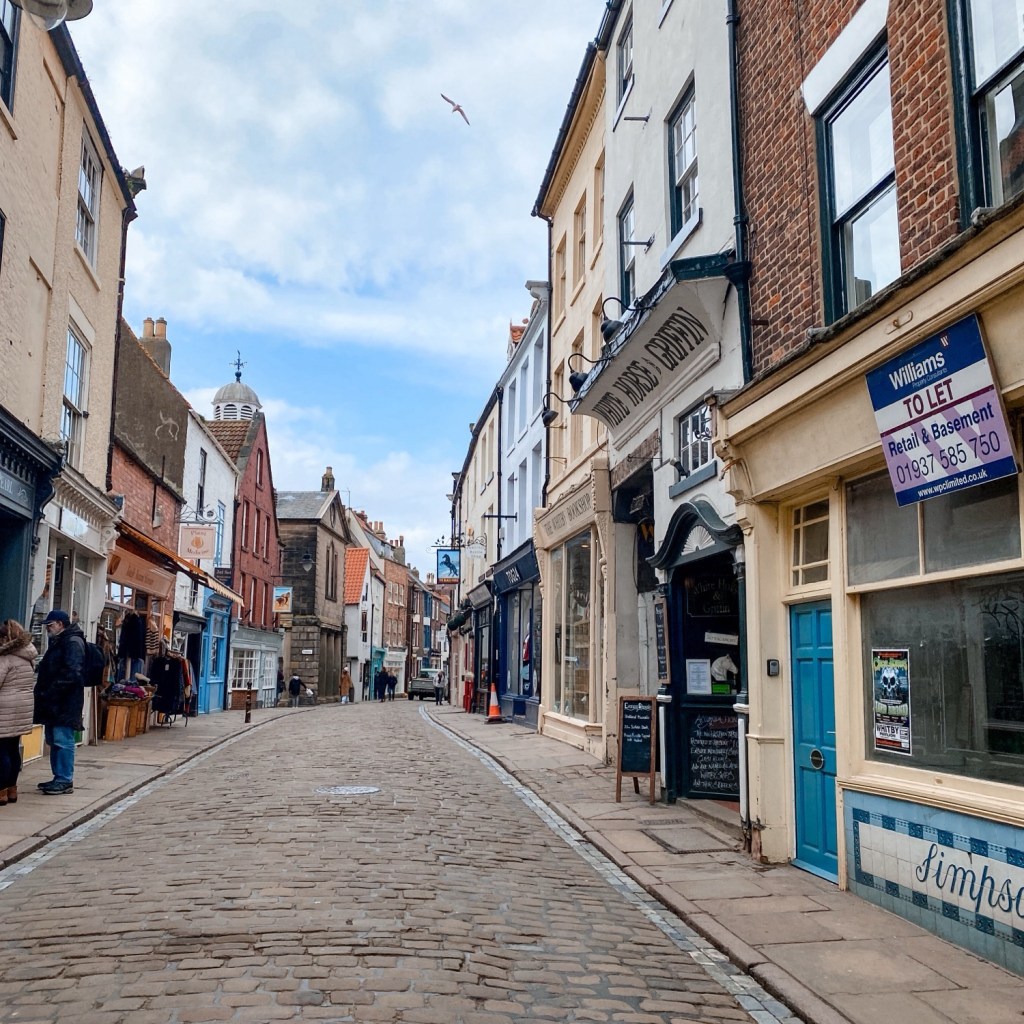
Grape Lane

Grape Lane is a charming pedestrianized lane just off Church Street. It is lined with a good variety of independent retailers including a jet shop, coffee shop, gift shops, and the Captain Cook Memorial Museum, which tells the story of the famous explorer’s connection to Whitby.

This street feels especially cozy in the early morning and at dusk, when the shadows from the narrow lane add to its storybook atmosphere.
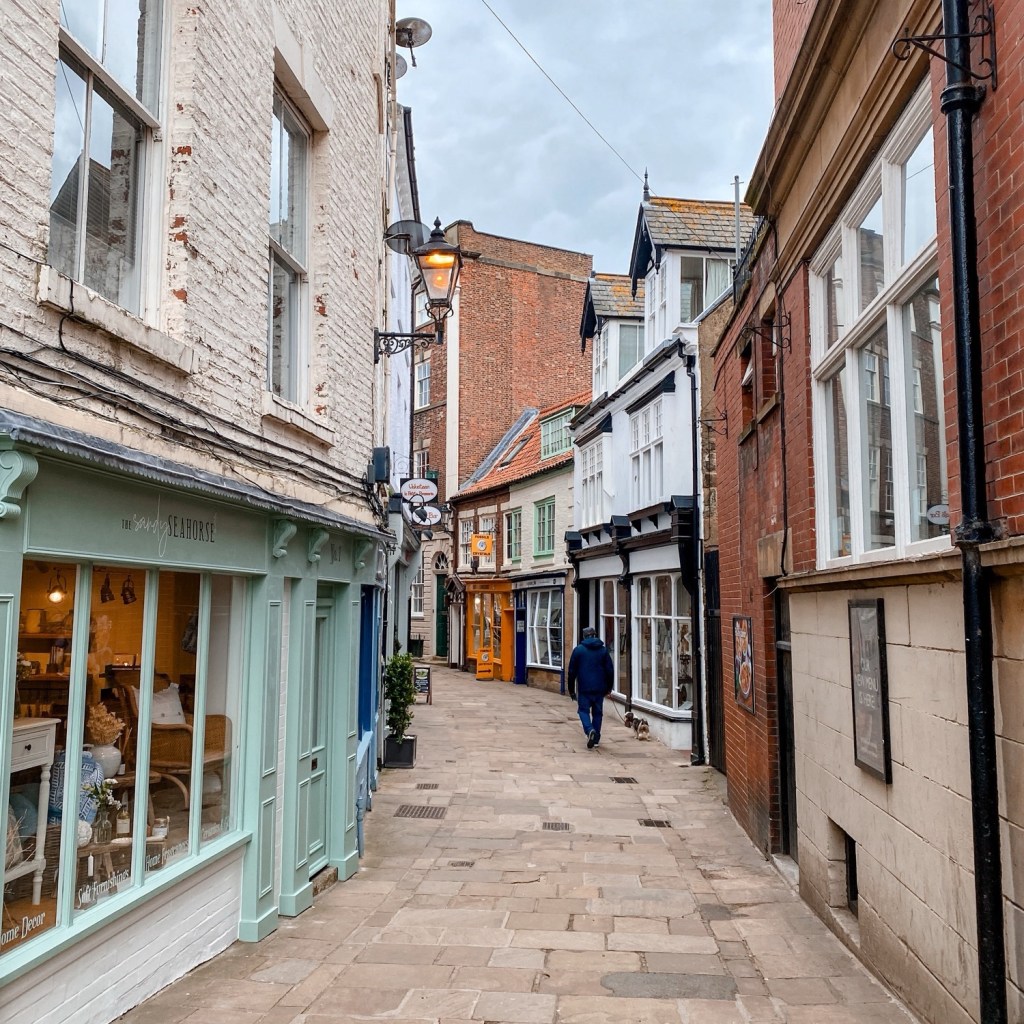
Blackburn’s Yard

Tucked behind Church Street, Blackburn’s Yard is one of the most picturesque spots in Whitby. This award winning courtyard has received accolades such as “Perfect Picture Yard” and “Whitby’s Best Kept Garden.” Within the yard is the Wash House Pottery, where you can browse beautiful handcrafted pottery and ceramics—a perfect stop for unique souvenirs.

The yard’s stone cottages, blooming gardens, and narrow walkways make it a favorite for photographers and quiet exploration alike.
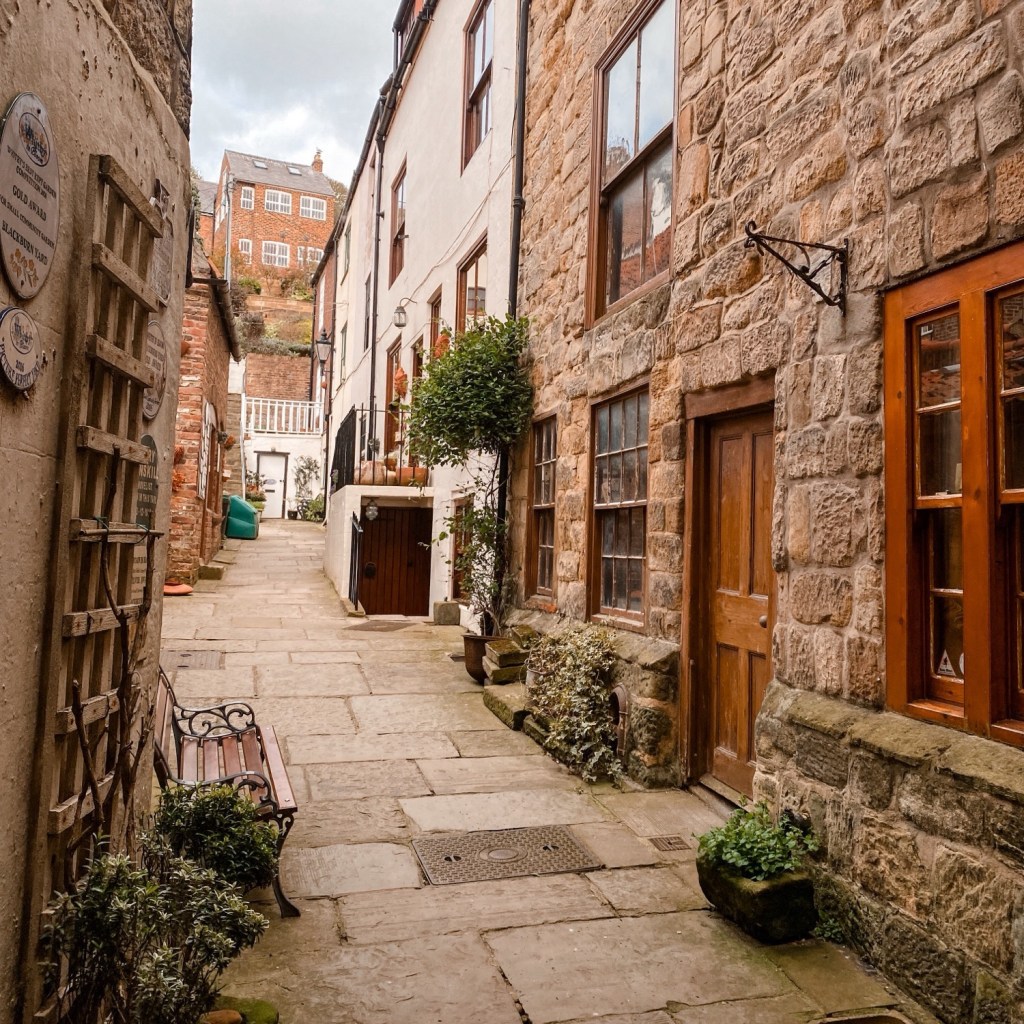
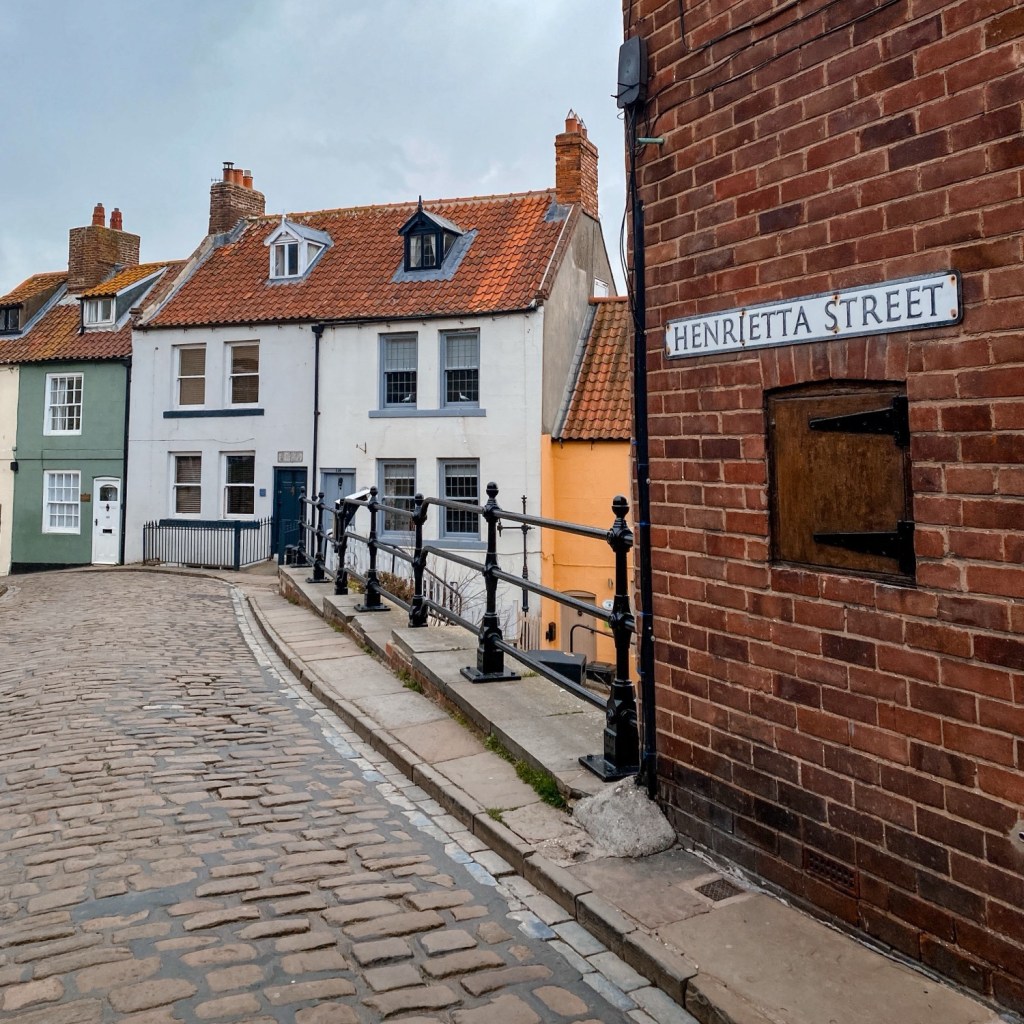
Henrietta Street

Henrietta Street was once known as Haggerlythe in the thirteenth century and was later renamed after Henrietta Cholmley, wife of eighteenth century parliamentarian Nathaniel Cholmley. The street was historically desirable for its easy access to the sea and panoramic views.

Today, Henrietta Street remains one of Whitby’s most scenic spots. From its elevated position, you can enjoy sweeping views of the harbor, the North Sea, and Whitby Abbey perched dramatically on the cliff above.
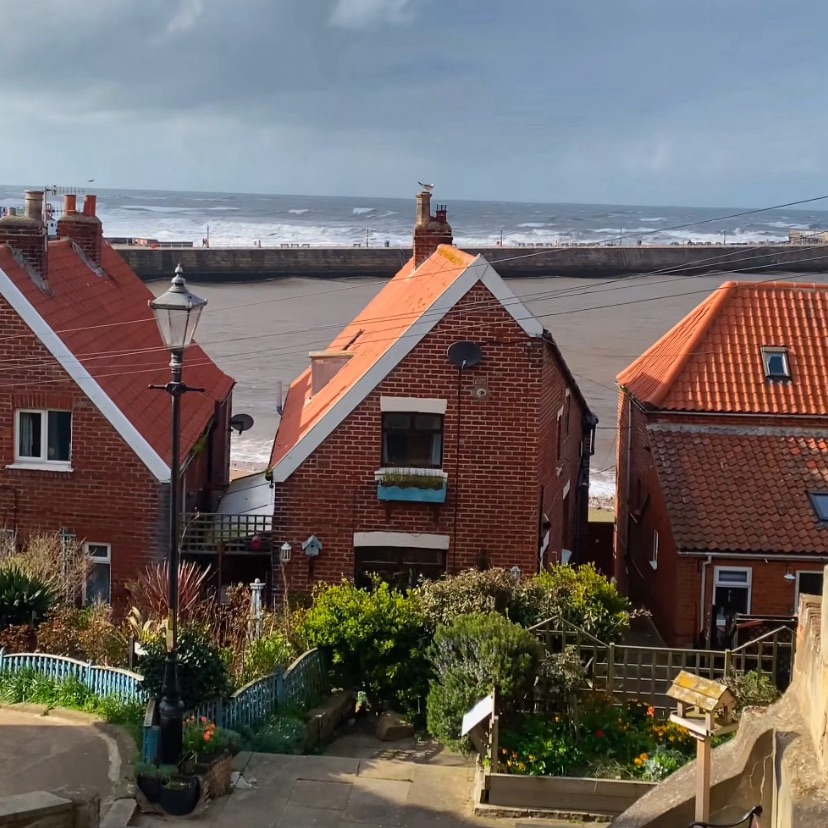
Tate Hill

Tate Hill is a small but incredibly scenic street that offers one of the prettiest viewpoints in Whitby. From here, you can enjoy beautiful views over the cottage rooftops toward Whitby’s piers and lighthouses, making it a perfect spot for photography. If you are looking for a quiet place to pause and take in the town from above, Tate Hill is well worth adding to your walk.
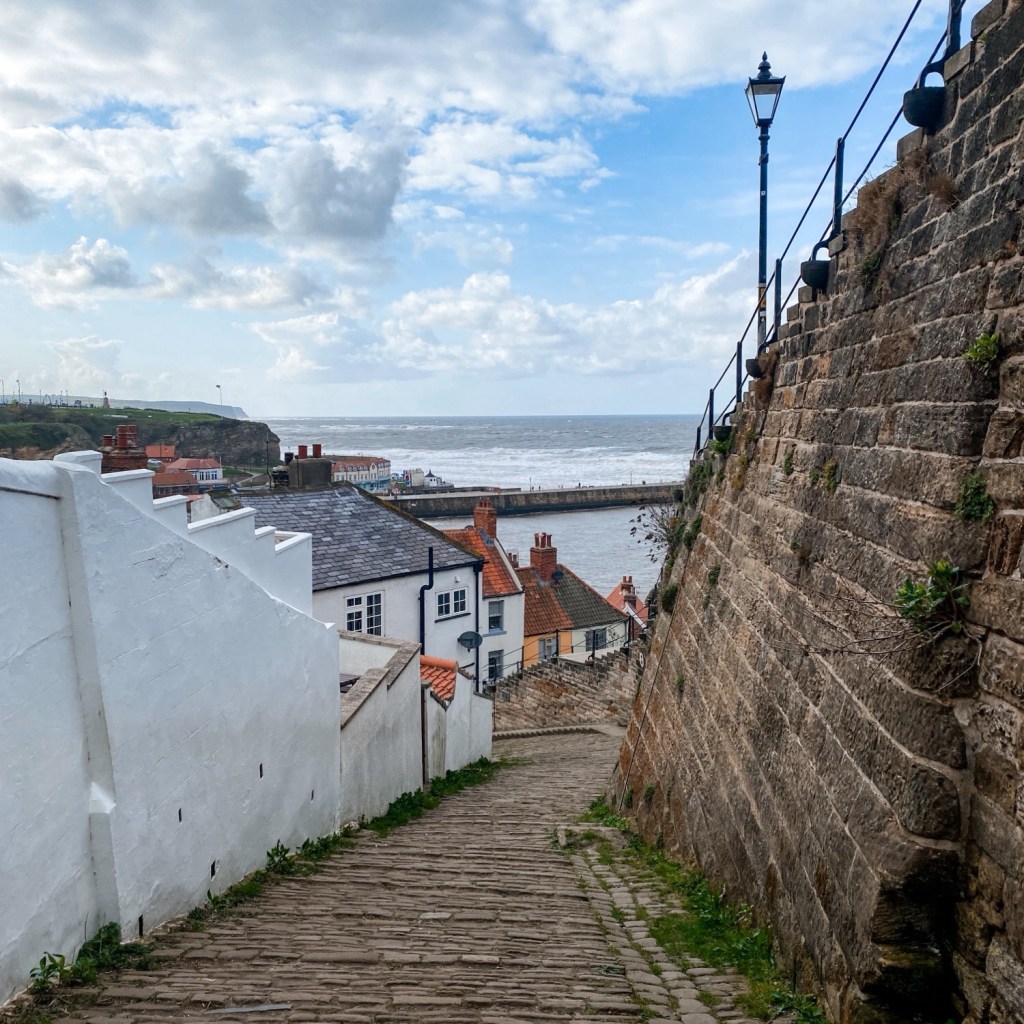
Church Lane and Donkey Road

The steep and cobbled Donkey Road dates back to 1370, although the stonework you see today was laid in 1774. The path runs parallel to the famous 199 Steps and leads up toward the iconic Whitby Abbey.

Donkey Road earned its name from the donkeys that once lived on the abbey plain and made their daily journey down to the beach, where they gave donkey rides to visitors. While the donkeys no longer walk the route themselves, the historic name remains.

As you make your way down Donkey Road, you are treated to a striking view over the rooftops, shops, and the sea beyond. And trust me, the walk down is far easier and just as rewarding as the climb up!
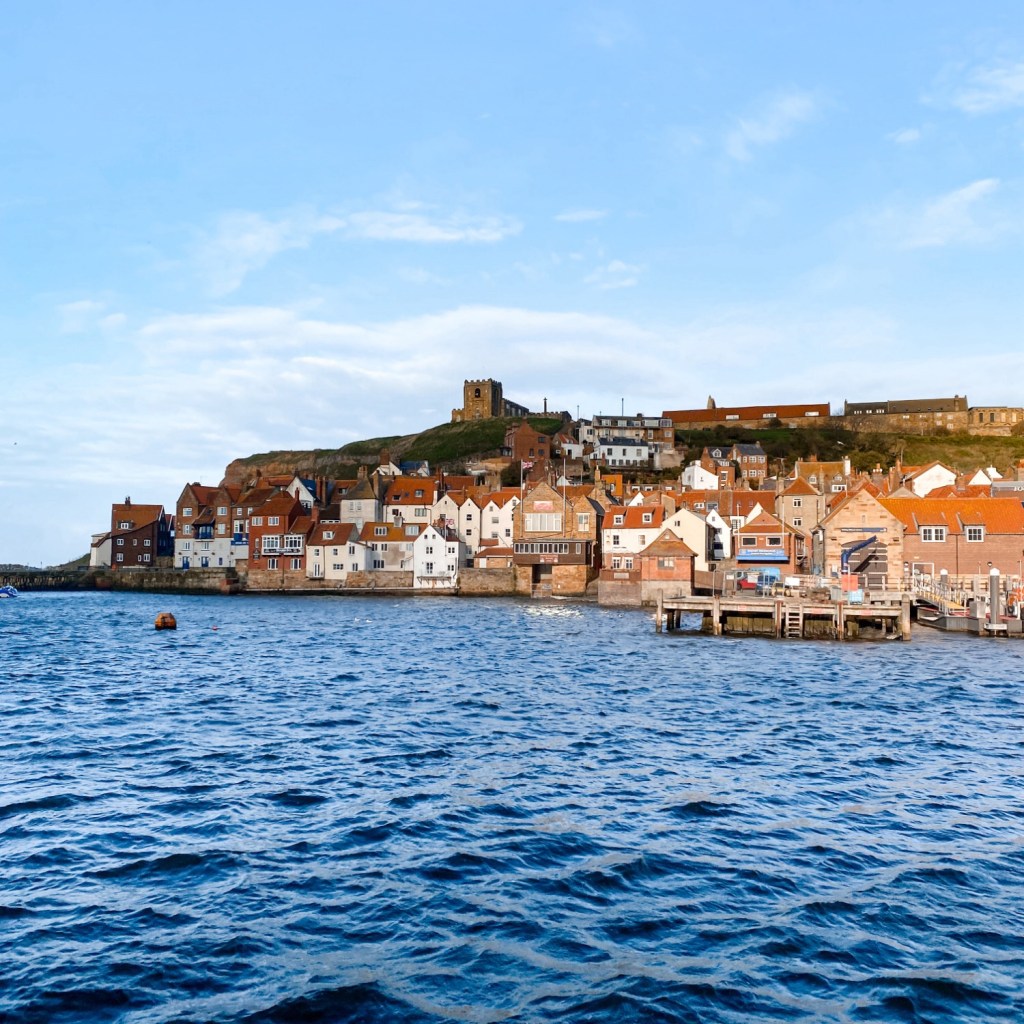
Pier Road

Pier Road in West Whitby feels like classic seaside England. This street leads directly to the main beach and is lined with amusement arcades, ice cream stalls, fish and chip shops, and a local fish market. It is one of the liveliest streets in the village and a great place to experience Whitby’s maritime energy.
Cliff Street

Cliff Street is a lovely street to wander, offering wonderful views over the coastline and the village below. It is lined with charming houses and holiday cottages, making it a peaceful yet central place to stay.

From Cliff Street, you are only minutes from Whitby town centre, the beach, the pier, and many of the village’s main attractions, which makes it a great base if you plan to spend the night in Whitby. You can check for accommodations here and around the area through Booking.comExpedia, or Vrbo.

Getting to Whitby

Whitby is located on the North Yorkshire coast and is accessible by both car and public transport.

• By car: Whitby is around 1.5 hours from York and makes a great stop on a North Yorkshire road trip. You can rent a car through Expedia or Booking.com.
• By train: The Esk Valley Railway connects Whitby to Middlesbrough and passes through stunning countryside.
• By guided tour: If you are based in York or Leeds, many visitors choose to visit Whitby on a day tour of the North York Moors and coast.

How Long to Spend in Whitby

To truly enjoy Whitby, plan to spend at least one full day, although two days is ideal. This allows enough time to explore Whitby’s prettiest streets, climb to Whitby Abbey, walk the harbor, visit museums, enjoy local seafood, and explore the coastline without rushing.

Final Thoughts

I would love to know what you think of these street recommendations. Is there one you are most excited to explore? Let me know in the comments, and do not forget to add these nine prettiest streets in Whitby to your Whitby itinerary!

If you want to discover even more about the town’s history, legends, and hidden corners, you can book a self-guided Whitby walking tour here and explore at your own pace.

Find this post helpful? You can buy me a warm drink and support my work here!

18 Best Places to See in Whitby England | 2026 Travel Guide

Disclaimer: This post contains affiliate links. This means that if you click on a link and make a purchase or booking, I may earn a small commission at no extra cost to you. This helps support my blog and allows me to continue creating helpful travel guides.

Whitby is a historic seaside town on the east coast of North Yorkshire, England, sitting where the River Esk meets the North Sea. With its working harbour, dramatic clifftop abbey, cobbled streets and literary legends, Whitby is one of the most atmospheric coastal destinations in the UK.

Tourism in Whitby dates back to the Georgian era and grew rapidly with the arrival of the railway in 1839. Today, visitors come for coastal walks, traditional fish and chips, fossil hunting, gothic history and easy access to the North York Moors National Park. Whitby is also forever linked to Bram Stoker’s Dracula and has appeared in popular British television shows such as Heartbeat.

Most of the places below are free to visit, with Whitby Abbey being the main paid attraction.

Visit Whitby Harbour and the Lighthouses

Whitby’s harbour is the heart of the town. Since the early fourteenth century, it has welcomed trading vessels, fishing boats and whaling ships. Today, it remains lively with pleasure boats, seafood stalls and scenic viewpoints.

You can walk along both piers and spot Whitby’s famous lighthouses. West Pier Lighthouse, built in 1831 from local sandstone, stands tall at the harbor entrance. East Pier Lighthouse, built in 1855, sits opposite. Further along the coast is Whitby High Lighthouse, which has guided ships since 1858.

This area is ideal for sunrise photography, harbor walks and boat watching. It is also where many coastal boat tours depart.

Walk Along Sandgate Street and the Market Place

Sandgate Street is one of the best places to experience Whitby’s shopping scene. This street is well known for Whitby jet shops, where visitors can browse traditional jewelry made from fossilized jet.

At the end of Sandgate Street lies the Market Place, which has been a trading area since the mid seventeenth century. Today you will still find local stalls and small shops selling everything from sweets to handmade crafts. You can even find nearby hotels and guesthouses close to the harbor by clicking here in Booking.com.

Wander Through Church Street

Church Street, originally known as Kirkgate, is one of Whitby’s oldest streets. It is lined with shops, cafés, and historic cottages, some dating back to the fifteenth century.

The street sits at the base of the famous 199 Steps and is a lively place to stop for lunch or dinner. (Mister Chips is a popular spot!)

Discover Blackburn’s Yard

Whitby’s historic yards are hidden rows of cottages tucked behind the main streets. Blackburn’s Yard, just off Church Street, is one of the prettiest and best preserved.

This small courtyard has won awards for its gardens and is home to the Wash House Pottery, where you can browse handmade ceramics. It is a peaceful place to pause and soak in the quieter side of Whitby.

Spot the Crooked Cottage

Located near the base of the 199 Steps, the Crooked Cottage is over four hundred years old and instantly recognizable for its sloping lines and bold colors.

The cottage is available as a holiday rental here and offers harbor views from the upper floors.

Wander Along Grape Lane

Grape Lane is a charming pedestrian street packed with small independent shops. Here you will find gift stores, jet shops, cafés and the Captain Cook Memorial Museum, dedicated to the famous explorer who once lived in Whitby.

The museum is one of the town’s most popular attractions and can easily be included in a self guided walking route.

Walk Along Henrietta Street

Henrietta Street was once considered one of the most desirable addresses in Whitby, especially among fishermen, due to its sea access and elevated views.

From here, you get beautiful sightlines across the harbor and up toward Whitby Abbey. It is a fantastic photography stop and a quieter alternative to the busier streets below.

Climb the 199 Steps

The 199 Steps have been part of Whitby since at least 1370. Originally wooden, they were later rebuilt in stone. Climbing them is almost a rite of passage for visitors.

The steps are famously featured in Bram Stoker’s Dracula, when the vampire arrives in Whitby during a storm. Halfway up, you will find benches and viewpoints that offer lovely harbor views.

Relax on Whitby Beach

Whitby has two main beaches, Tate Hill Beach near the harbor and West Cliff Beach stretching north toward Sandsend.

These beaches are popular for fossil hunting, especially after storms. They are also ideal for coastal walks, family outings and sunset photography.

Explore St Mary’s Church

At the top of the 199 Steps stands St Mary’s Church, a beautiful clifftop church dating back to the twelfth century. Its graveyard, leaning headstones and windswept location add to Whitby’s gothic reputation.

This is one of the most atmospheric places in town and pairs perfectly with a visit to Whitby Abbey.

Visit Whitby Abbey

Whitby Abbey is the most iconic landmark in the town. Founded in 657 AD, the abbey played a major role in early English Christianity and later inspired Bram Stoker’s Dracula.

Today, the dramatic ruins overlook the sea and town below. Entry is paid, but the site is well worth visiting for both history lovers and photographers.

Walk Down to the Village via Donkey Road

The steep, cobbled Donkey Road runs parallel to the famous 199 Steps and leads up toward Whitby Abbey. Historically, this was the route used by donkeys as they traveled between the beach and the town to carry out heavy work along the shore. Today, the donkeys are transported by small vehicles to and from their field on the Abbey Plain, but the road still offers a fascinating glimpse into Whitby’s working past.

Walking along Donkey Road is a quieter alternative to the 199 Steps and provides beautiful views over the rooftops and harbor. It is a wonderful route for photographers and anyone wanting to experience a more traditional side of Whitby.

Walk Along Pier Road

Located in West Whitby, Pier Road is one of the liveliest streets in town and leads directly to the main beach. This is where you will find amusement arcades, ice cream stalls, souvenir shops, and some of Whitby’s best known fish and chip restaurants. There is also a small fish market in this area where fresh catches are often sold.

Pier Road is especially popular with families and is a great place to soak in Whitby’s classic seaside atmosphere before heading onto the pier or down to the beach.

Visit the Whitby Whalebone Arch

The original Whalebone Arch was erected on Whitby’s West Cliff in 1853. It was later replaced in 1963 with a replica from Norway, and again in 2003. Today’s arch perfectly frames the distant ruins of Whitby Abbey, making it one of the most photographed viewpoints in town.

The arch is a powerful reminder of Whitby’s whaling history. During the eighteenth and nineteenth centuries, Whitby was a major whaling port. Ships regularly sailed to Greenland in search of whales for their valuable oil. Many never returned. The Whalebone Arch stands as both a landmark and a memorial to that era.

Explore the Whitby Museum and Pannett Park

Whitby Museum, located in Pannett Park, showcases local fossils, jet jewelry, whaling history and rotating exhibitions. Pannett Park itself is a peaceful place to walk, especially in spring and summer.

Walk Along Cliff Street

Cliff Street offers lovely views over the coastline and down toward the harbor. It is a beautiful street to wander, lined with characterful buildings and holiday rentals. Staying here puts you within minutes of the town centre, the pier, the beach, and Whitby’s main attractions.

This area is ideal for travelers who want central accommodation with coastal views. This cottage is a beautiful option!

Spot the Robert Lennard House

The Robert Lennard House stands on narrow Cliff Street and is one of Whitby’s most distinctive buildings. It was built in 1888 by Robert Lennard as the headquarters for his work as an architect, builder, and antique dealer. A blue plaque on the exterior marks the date of construction.

Take a moment to admire the intricate architectural details, especially around the striking corner bay window, which makes this building stand out among its neighbors.

Visit the Alice in Wonderland Garden

Created by the Whitby in Bloom group, this small but charming garden is located on Cliff Street next to the car park. It is a peaceful place to rest, enjoy the sea air, and take in the views.

The Alice themed garden features oversized playing cards engraved with quotes from the novel, a decorative archway, and a giant stopwatch seat. It forms part of the White Rabbit Trail that runs through town, which can be purchased at the Whitby Tourist Information Centre.

This is a lovely stop for families and anyone looking for something a little different from Whitby’s gothic reputation.

Suggested Whitby Day Itinerary

Morning
Harbor walk and lighthouse views
Sandgate Street and Church Street
Climb the 199 Steps and visit St Mary’s Church

Midday
Whitby Abbey
Lunch on Church Street or near the harbor

Afternoon
Grape Lane and Captain Cook Museum
Blackburn’s Yard and West Cliff walk

Where to Stay and How to Get There

Whitby offers everything from boutique guesthouses to sea view hotels and historic cottages. Accommodation can be easily compared through Booking.com, Expedia and Vrbo.

Travelers flying in can search flights to nearby airports through Aviasales and arrange transfers from Leeds, Manchester or Teesside using Welcome Pickups or Kiwitaxi.

Final Thoughts

Whitby is a town where history, legend and coastal beauty come together. Whether you visit for the abbey, the beaches, the literary connections or the seafood, Whitby offers far more than most seaside towns its size.

If you are planning a trip to North Yorkshire in 2026, Whitby deserves a central place in your itinerary!